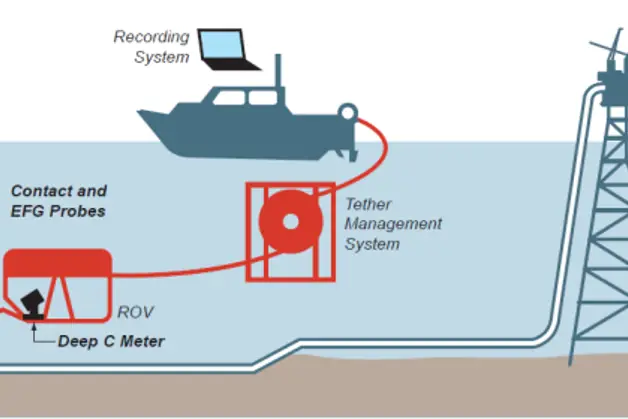
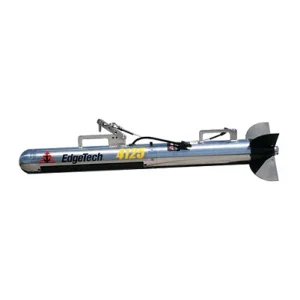
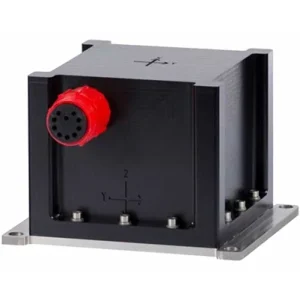
The Polatrak Deep C Meter is a rugged cathodic-protection survey system designed for deployment on work-class and inspection-class ROVs. Built for deepwater inspection, the system enables subsea teams to measure and document cathodic-protection potentials on pipelines, platforms, structures, and other submerged assets.
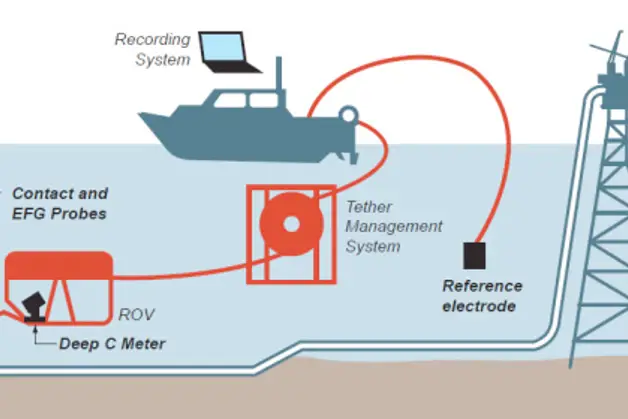
The Deep C Meter is rated for operation at depths of up to 3,000 meters and can support contact, proximity, and, when appropriately configured, electric-field-gradient measurements. Its subsea display allows readings to be observed through the ROV camera, while interface-equipped models can transmit continuous digital data to the surface for recording and analysis.
Ideal Applications
The Polatrak Deep C Meter is well suited for:
- Subsea pipeline cathodic-protection surveys
- Offshore platform and structural inspections
- ROV-based corrosion surveys
- Subsea production equipment inspection
- Anode-performance verification
- Contact and proximity potential measurements
- Deepwater asset-integrity programs
- Offshore maintenance and life-extension projects
Key Features
- Designed for work-class and inspection-class ROV deployment
- Rated to 3,000 meters or 10,000 feet
- Supports cathodic-protection measurements in demanding subsea environments
- Includes a Polatrak ROV-II contact probe
- High-visibility LED readout for observation through an ROV camera
- Replaceable probe tips and electrode components
- Silver/silver-chloride electrodes supplied for seawater applications
- Multiple system configurations available for visual-only or digitally integrated surveys
- Optional electric-field-gradient capability on compatible models
- Survey software available for planning, logging, and reporting CP data
Reliable CP Data for Subsea Asset Inspection
Cathodic-protection measurements help operators evaluate whether submerged steel infrastructure is adequately protected against corrosion. The Deep C Meter gives offshore teams a practical way to collect these measurements using an ROV, reducing the need for diver-based inspection while supporting deeper and more challenging survey environments.
Its contact probe can be positioned against exposed steel using the ROV manipulator, while the subsea display provides a visual record of the measurement. On interface-equipped Deep C Meter models, readings can also be transmitted continuously to the surface and captured through Polatrak Survey software.
Available Configurations
The Deep C Meter family includes several configurations designed for different survey requirements:
Deep C Meter 3000 AD
An ROV-powered system with visual display, digital communications, and software integration. It supports RS-232 or RS-485 data transfer and is rated to 3,000 meters.
Deep C Meter 3000 EFG
Adds electric-field-gradient capability for detecting current flow in seawater and evaluating anode activity without requiring direct contact for every measurement.
Deep C Meter 3000
A stand-alone, battery-powered configuration that does not require an interface with the ROV system. Readings are viewed through the ROV camera using the subsea display.
Why Choose the Polatrak Deep C Meter?
The Deep C Meter combines a field-proven CP probe, deepwater construction, and flexible deployment options in one ROV-ready survey package. It can support straightforward visual inspections as well as integrated digital surveys requiring continuous data collection and reporting.
For offshore operators, survey contractors, and inspection teams, this flexibility makes the system suitable for both targeted spot measurements and broader asset-integrity programs.
Product Information